
Welcoming Every Guest: How to Support Travelers With Disabilities
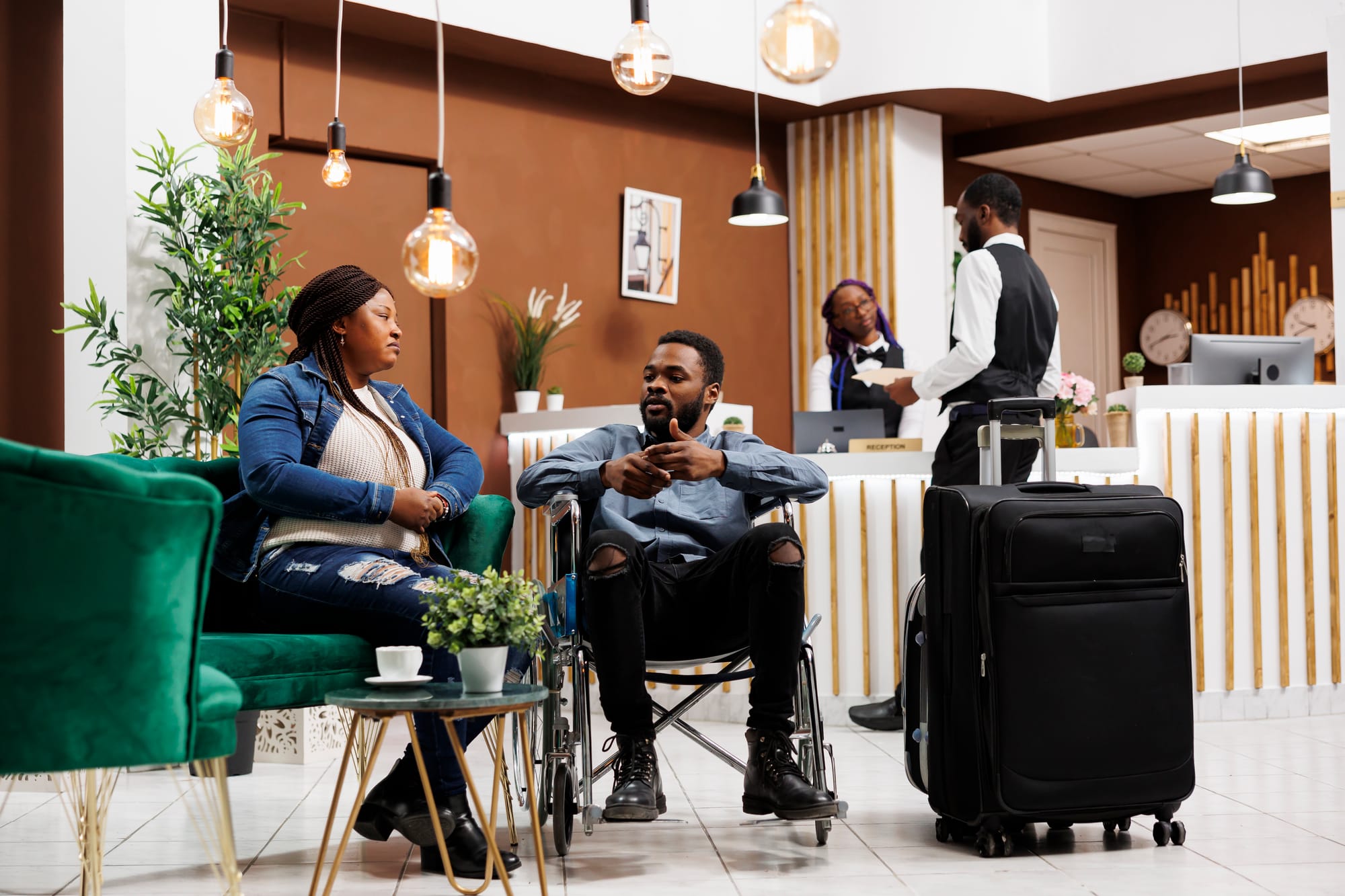
In hospitality, we pride ourselves on making every guest feel valued and welcome. We’ve all seen that guest arrive after a long travel day who simply wants a warm greeting, a comfortable room, and coffee strong enough to revive a small village.
When a guest has a disability, thoughtful service goes beyond a friendly smile or a quick check in. It means ensuring that the environment, the interactions, and the overall experience are truly accessible in every way: physically, emotionally, and with respect.
The good news is that great accessible service is not complicated. It grows from empathy, awareness, and recognizing that each guest is the expert in their own experience.
Why Accessible Service Matters
Beyond the requirements of the Americans with Disabilities Act (ADA), accessibility is about creating a culture of welcome.
- One in four U.S. adults has a disability.
- Travelers with disabilities represent billions in travel spending annually.
- Reviews about accessibility travel quickly, both positive and negative.
- U.S. travelers with disabilities spend nearly $50 billion annually on travel; including companions, their total economic contribution is estimated at over $100 billion per year.
Plus, it’s simply the right thing to do. No one ever regretted being kind and prepared.
Ask — Don’t Assume
A common instinct is to jump into “let me help you!” mode. It comes from a good place, but it can go sideways quickly if it isn’t actually helpful.
Instead, try:
- “How may I assist you today?”
- “Is there anything I can do to make your stay more comfortable?”
- “What accommodation would best meet your needs?”
Simple. Empowering. Respectful.
And remember: helping is only helpful if the person wants it.
(Yes, holding the door can still earn you a smile. Just don’t grab someone’s wheelchair and start rolling. That’s not service... that’s kidnapping.)
Not All Disabilities Are Visible
Disabilities aren’t always obvious. Some guests may have chronic pain, anxiety, PTSD, autism spectrum disorders, or other conditions that affect how they travel and interact, even though they may appear fully able-bodied.
This is where grace and patience come in. A guest who asks to avoid a crowded lobby, needs a little extra time to check in, or seems flustered by noise may not be “difficult.” They may simply be managing an unseen challenge.
- Avoid making assumptions based on appearances.
- Be flexible with requests for quiet areas, extra time, or alternative communication methods.
- Remember: just because you can’t see a disability doesn’t mean it isn’t real.
A little understanding can turn a stressful moment into one of genuine relief for your guest.
Speak to the Guest, Not the Companion
If a guest is accompanied by someone, address the guest first. Nothing says “I see you” like, well... seeing the person.
Right way: “Welcome! How can I assist you today?”
Wrong way: “Ask her what room type they need.”
We don’t assume. We don’t talk over. We don’t narrate their needs like a nature documentary.
Service Animals Are Working, Not Just Vacationing
Service animals aren’t pets. They’re working professionals doing an important job.
Think of them as the colleague who always shows up on time and never complains about the break schedule.
- Don’t ask for a demonstration of their task.
- Don’t pet or distract them without permission.
- You may only ask two ADA-approved questions if it’s unclear:
- Is the dog a service animal required because of a disability?
- What task has the dog been trained to perform?
And no, an “emotional support alpaca” does not qualify. Nice try though.
Common Guest Scenarios & Thoughtful Responses
| Situation | Great Service Example |
|---|---|
| Guest with mobility device | Offer accessible room and path information, assist with luggage only if requested |
| Guest with hearing disability | Provide written instructions, offer text-based communication |
| Guest with vision disability | Offer to describe layout or escort if accepted |
| Guest with cognitive or learning disability | Give one instruction at a time, remain patient and calm, don't talk down to them |
| Guest with an unseen disability | Be flexible with timing, avoid judgment, allow privacy and support |
| Emergency situations | Know evacuation procedures for guests with disabilities |
Training your team to stay calm, clear, and supportive can make all the difference.
It’s Not About Perfection — It’s About Presence
Nobody expects staff to be ADA lawyers or mind readers. Guests just want:
- Respect
- Dignity
- Clear information
- Human kindness
And honestly... isn’t that what we all want?
Accessible service isn’t just a hospitality skill. It’s leadership in action.
Let’s Build Hospitality Where Everyone Belongs
When we support guests with disabilities thoughtfully, we create spaces where every traveler, whether using a wheelchair, cane, service dog, hearing aid, or managing an invisible disability, feels welcome and valued.
This isn't just about compliance. It's about hospitality! And yes, it’s also good business.
Want to Elevate Your Team’s Accessible Service Skills?
I offer training for hospitality teams on:
- ADA and accessibility basics
- Empathetic and appropriate guest communication
- Handling real-world service situations with confidence
- Confidence-building through practice and scenarios
Let’s make “every guest is welcome” more than a motto. Let’s make it a practice. (See my demo presentation under Services)
Contact me to schedule training or share this article with your team.