
What Should and Should Not Be in Your Employee Handbook and Why
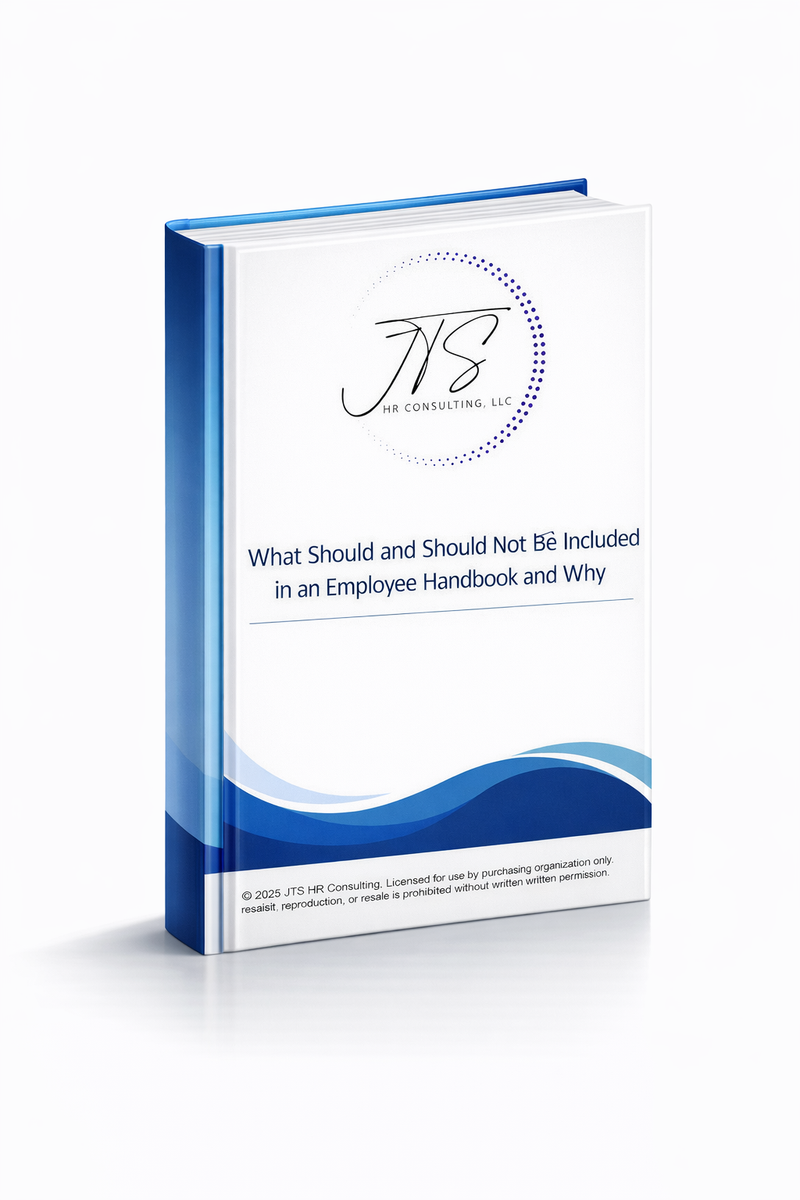
Employee Handbook Essentials: What to Include, What to Avoid, and Why Creating an employee handbook isn’t just about listing policies—it’s about protecting your organization, setting clear expectations, and creating consistency across your workforce. Employee Handbook Essentials: What to Include, What to Avoid, and Why is a practical, compliance-focused guide designed to help employers build handbooks that are clear, enforceable, and legally sound without becoming overly complicated or risky. Click "i" below for more information and a PREVIEW and sample of the content.
- Category: Toolkits
BUY NOW!
Description
PREVIEW - What Should and Should Not be in an Employee Handbook and Why.pdf
This comprehensive resource walks employers, HR professionals, and managers through every major section that belongs in a well-written handbook, explaining not only what to include, but why each section matters from an operational and legal standpoint. It also clearly outlines what should not be included—a critical but often overlooked aspect that can expose organizations to unnecessary liability.
Rather than relying on generic templates or dense legal language, this guide focuses on best practices that balance compliance, flexibility, and real-world application, making it ideal for small to mid-sized organizations, multi-state employers, and growing businesses that want clarity without sacrificing control.
What This Resource Covers
Essential handbook sections such as welcome statements, employment-at-will language, EEO commitments, standards of conduct, wage and hour practices, benefits overviews, workplace safety, technology use, performance management, and separation of employment
Clear explanations of why certain policies belong in the handbook—and why others should live in separate SOPs, plan documents, or manager manuals
Guidance on high-risk areas such as disciplinary language, benefits details, job security promises, and state-specific compliance issues
Best practices for keeping handbooks flexible, up to date, and legally defensible
Optional sections organizations may include to support culture, engagement, and values—without creating unintended obligations
Who This Is For
Business owners and leaders creating a handbook for the first time
HR professionals reviewing or updating existing policies
Managers who need to understand the purpose behind handbook language
Organizations operating in multiple states that need a clean, adaptable framework
This guide is especially valuable for employers who want to reduce risk, improve consistency, and avoid the common mistakes that turn handbooks into implied contracts or legal liabilities.
Developed by JTS HR Consulting, this toolkit reflects real-world HR experience and a deep understanding of employment law compliance—without losing sight of how policies actually function in day-to-day operations.